
The US Soccer Pyramid Explained: From Rec Leagues to the Pros
US soccer has no single ladder. This guide walks through the seven levels, from MLS and the NWSL down to recreational leagues, and explains how teams and players move between them.
By MyLeagueRankings ·
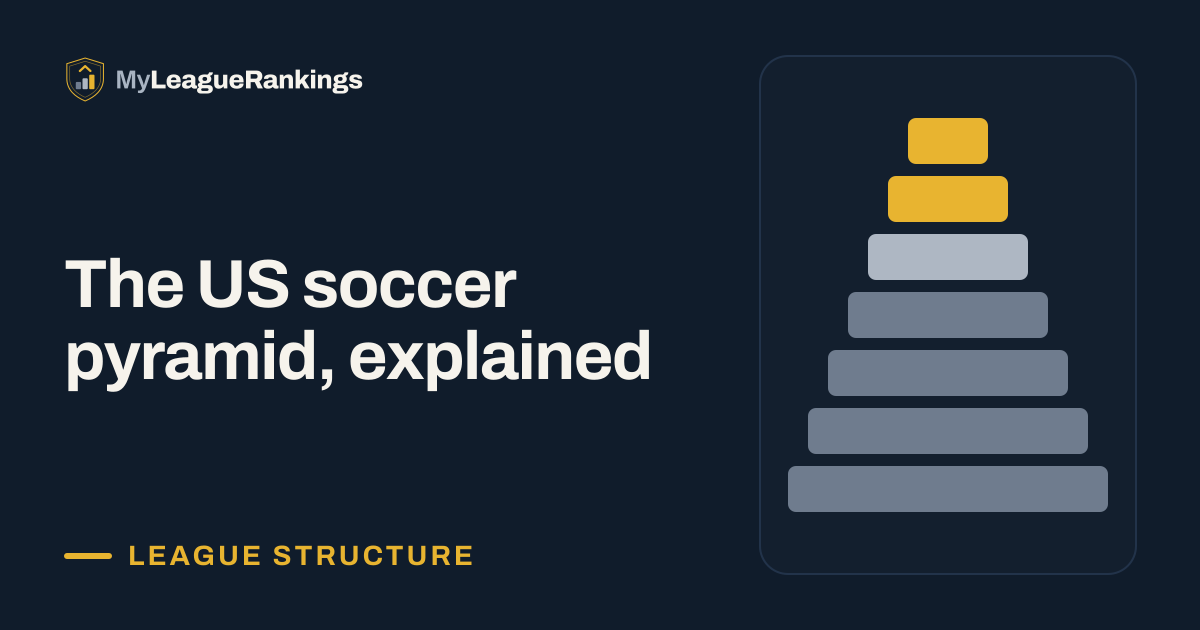
The US soccer pyramid is the stack of levels the game is played at, from recreational leagues at the bottom to Major League Soccer and the NWSL at the top. Unlike most soccer countries, the United States has no single ladder that connects those levels. Clubs are admitted to the national youth leagues, many state leagues promote and relegate on results, and most players start in rec.
That is why the question "what level is my kid's team?" is harder to answer here than it sounds. This guide goes through the levels from the top down.
The levels at a glance
| Level | Leagues it is known by | Who plays |
|---|---|---|
| Professional | MLS, NWSL, USL Super League | The first divisions, men and women |
| Lower-division pro | USL Championship, USL League One, MLS NEXT Pro | Men's professional leagues below the first division |
| College and amateur | NCAA, UPSL, WPSL, USL League Two, USL W League | College players and adult amateur and semi-pro teams |
| National youth leagues | MLS NEXT, ECNL, Girls Academy | Member clubs, about U13 to U19 |
| Regional youth leagues | ECNL Regional League, National 1 League, Pre-ECNL, GA Aspire and Inspire | Mostly U13 to U19, some from U11 |
| State and local leagues | State leagues, premier leagues | Usually U9 to U19 |
| Recreational leagues | Rec, in-house and academy leagues | Mostly U4 to U12 |
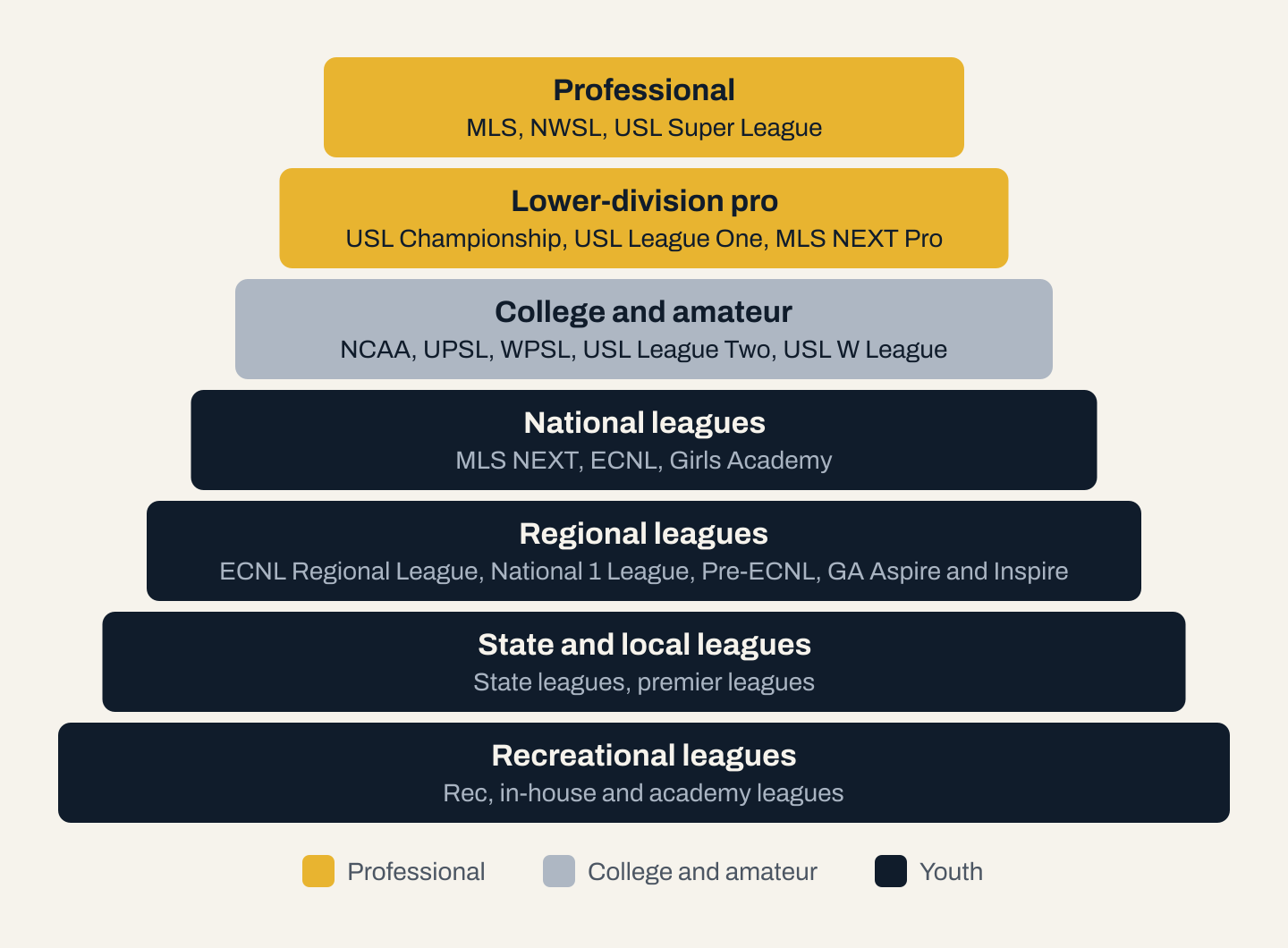
Our pyramid page lays out these levels with the leagues we rank at each one.
The professional levels
Professional. Major League Soccer is the men's first division. The women's game has two leagues sanctioned at Division One: the NWSL and the USL Super League. All three are closed leagues with no promotion from below. Players arrive from college, the academies, the lower divisions and abroad.
Lower-division pro. Under MLS sit the USL Championship, a second-division league, and at the third division USL League One and MLS NEXT Pro, where most teams are the reserve sides of MLS clubs. These leagues are professional, a step down in budget and attention, and have no promotion into MLS. The USL plans to link its own leagues by promotion and relegation from 2028, which we cover in promotion and relegation in American soccer.
College and amateur
This is where the youth pyramid leads. College soccer (the NCAA) and the adult amateur and semi-pro leagues (the UPSL, the WPSL, USL League Two and the USL W League) are where most players who keep playing after U19 end up, and where professional clubs scout.
We cover it in where college and amateur leagues fit.
The youth levels
National leagues
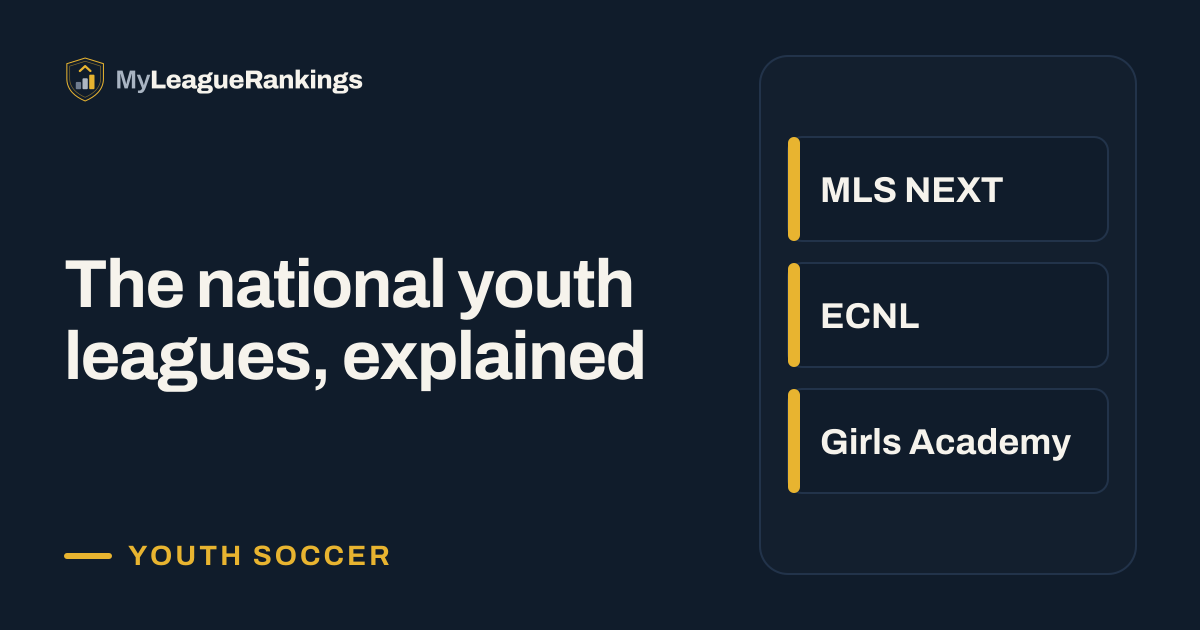
MLS NEXT (boys), the ECNL (boys and girls) and the Girls Academy are national leagues organized by club membership. A club is admitted, and its teams from about U13 to U19 play a conference schedule with national events and playoffs.
Teams are not promoted into these leagues on results alone. The league admits or promotes whole clubs, usually from the regional level below. More detail is in our guide to the national youth leagues.
Regional leagues
One step down are the conference-based leagues run by the national bodies (ECNL Regional League, Pre-ECNL, GA Aspire and GA Inspire) and the National 1 League. The National 1 League started in the 2026-27 season and combines US Youth Soccer's National League with US Club Soccer's NPL.
A club that keeps winning here is the kind that gets moved up, and a national-league club often plays its second team at this level.
State and local leagues
This is the widest level: leagues run by a state association or a group of clubs, usually U9 to U19, with divisions named things like Premier, Division 1, Gold and Silver. Here results do move teams. Many of these leagues promote and relegate between divisions, and the top divisions feed the regional leagues above.
Most competitive youth teams start at this level.
Recreational leagues
Everyone plays and there are no tryouts, mostly from U4 to U12. Scores are rarely published, so rankings only exist for the rec leagues that report them.
How teams and players actually move
The word pyramid suggests climbing one step at a time. In practice there are three different ways to move.
- By results. Inside state and local leagues that use promotion and relegation, the top of a division moves up and the bottom moves down.
- By club admission. Into the national leagues and the regional leagues they run, the club is admitted, not the team. A strong team at a club outside those leagues cannot win its way in on the field alone.
- By changing teams. Players move far more often than teams do. A player can go from a state-league team to a national-league club at tryouts without anyone being promoted.
We explain where each mechanism applies in promotion and relegation in American soccer.
Two things the pyramid does not tell you
A level is not a guarantee of quality. The top teams of a strong state league division can be better than the bottom teams of a regional conference. The level tells you who a team plays, not how good it is.
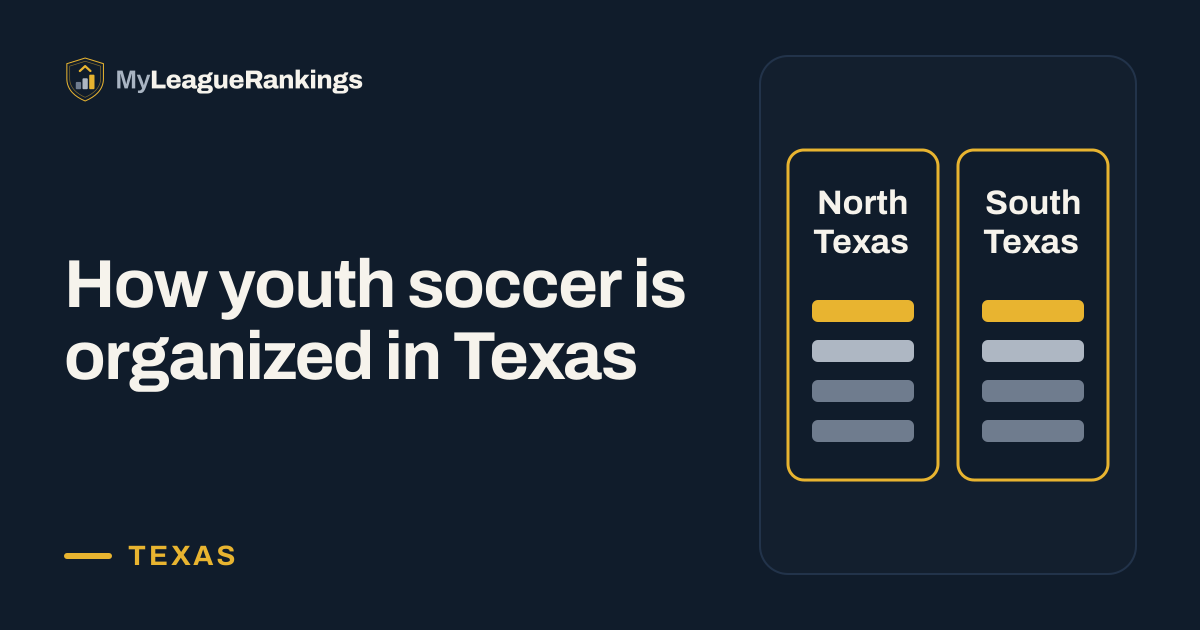
Levels look different by state. Which leagues exist, who runs them and what they are called changes from one state to the next. Texas, for example, is split between two state associations. See how youth soccer is organized in Texas.
Use it with rankings
A level places a league. A ranking places a team inside its league. Use both: find the league on the pyramid or the leagues page, then open the flight to see where a team stands and how that was calculated.