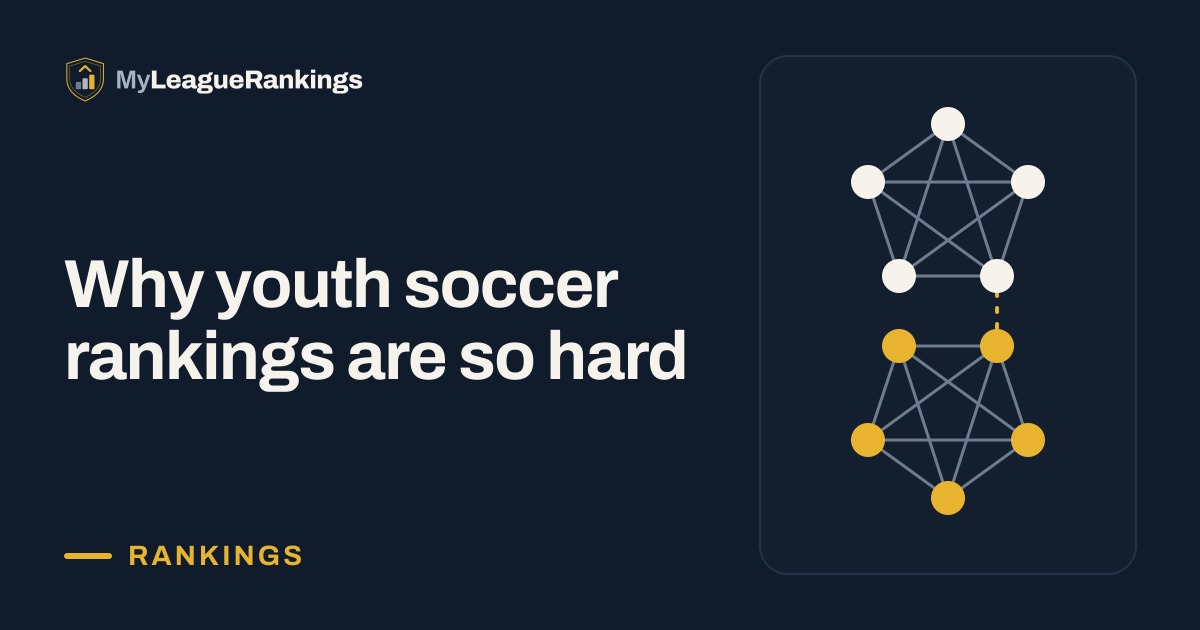
Rosters change every season, kids develop at different speeds, and most teams never play each other. Here is why so many youth soccer rankings compare unlike things, and what a fair one needs.
What every column in a league table means, how points and tiebreakers work in youth soccer, why a table can mislead mid-season, and what a power ranking adds to it.
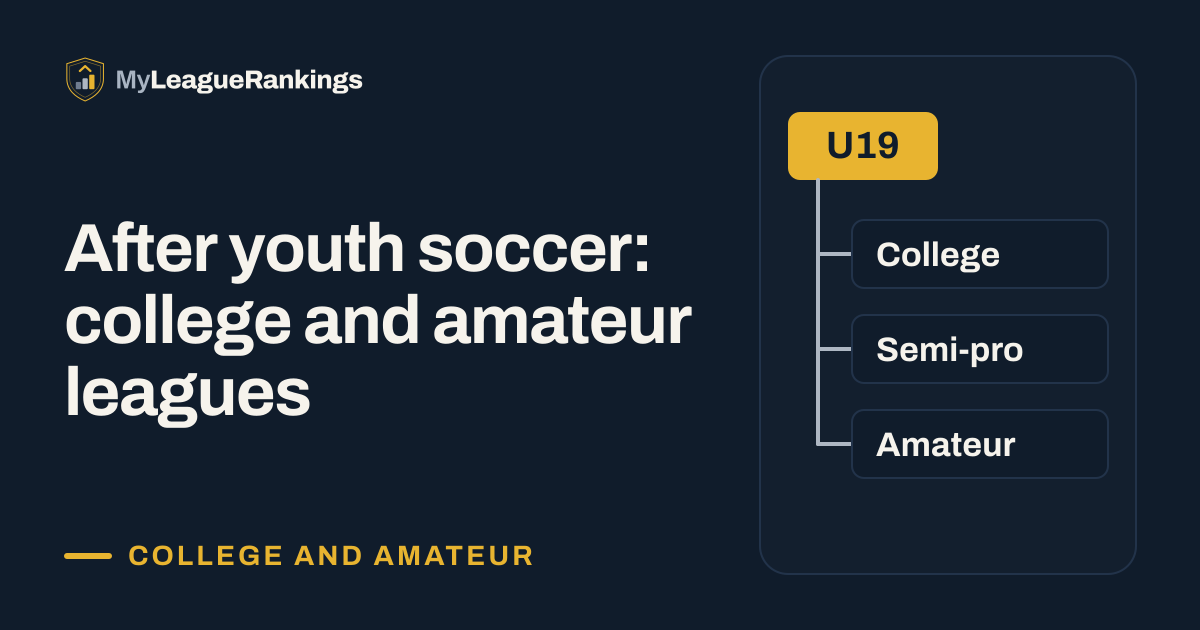
Most players who keep going after U19 play college or adult amateur soccer. Here is how the NCAA, the UPSL, USL League Two, the USL W League, the WPSL and city leagues fit together.
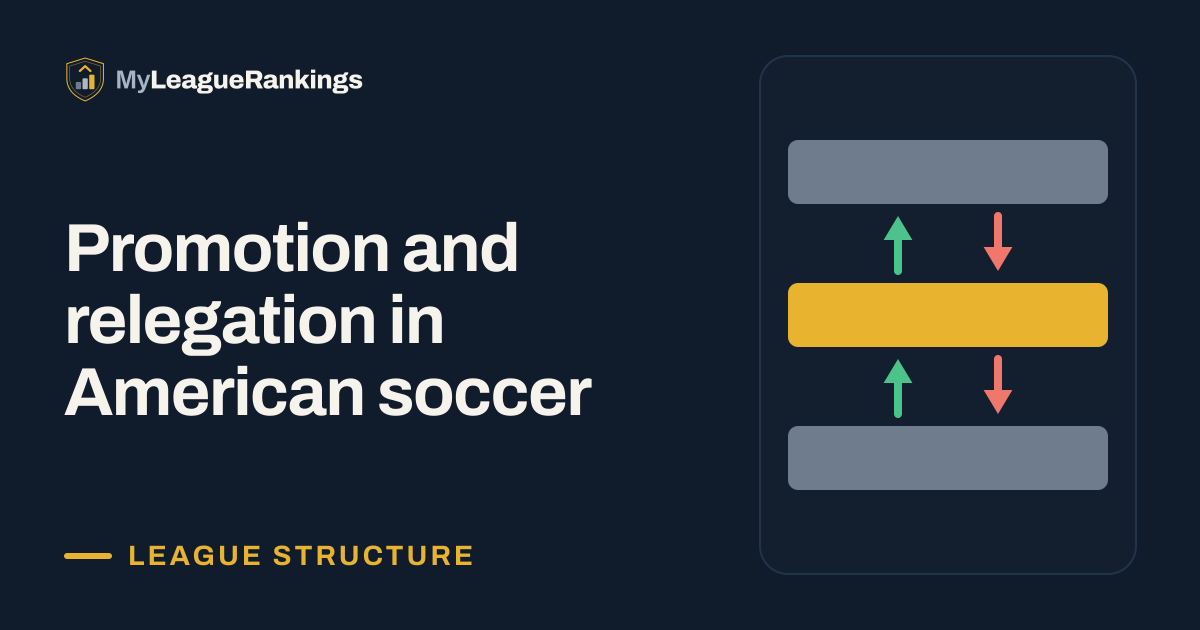
The top American leagues are closed, but promotion and relegation is common in state youth leagues and adult amateur soccer. Here is where results move teams and where they do not.
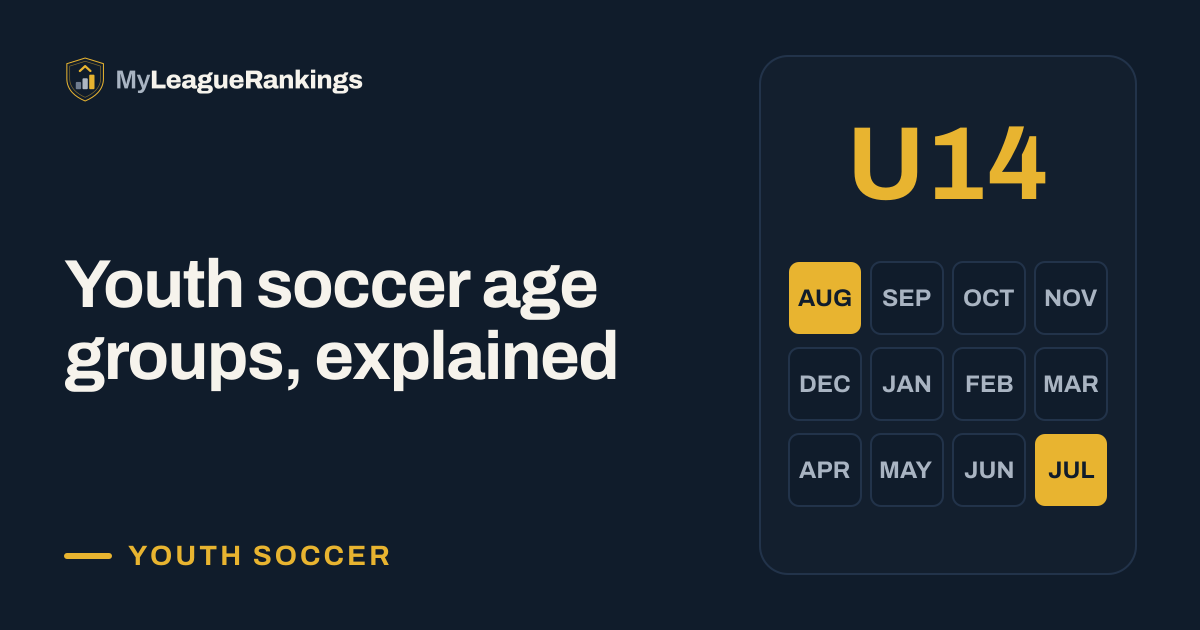
What the U in U14 means, how the August 1 cutoff used from the 2026-27 season differs from birth-year age groups, and how to read the years in a team's name.
Cups run beside the league season and follow different rules. Here is how State Cup, Presidents Cup, league playoffs, tournaments and showcases differ, and what advancing means.
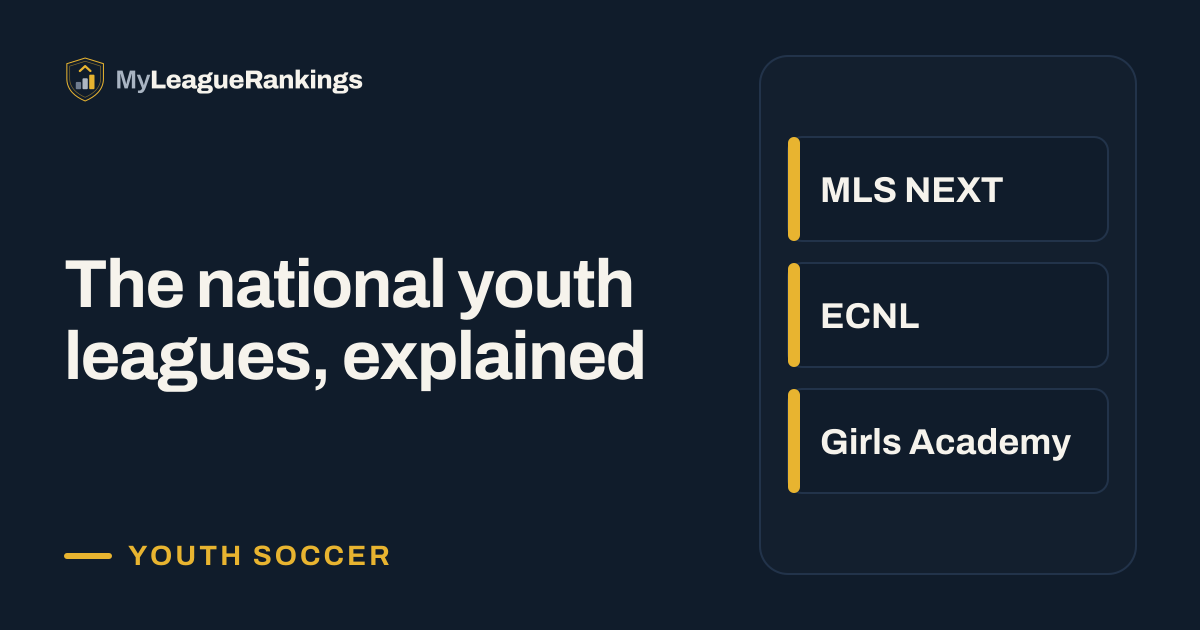
What MLS NEXT, the ECNL and the Girls Academy are, who plays in them, the regional leagues underneath each one, and why a team cannot simply win its way in.
Plain definitions of the words on a youth soccer schedule: club, league, conference, division, flight, bracket, standings, power ranking, strength of schedule and more.
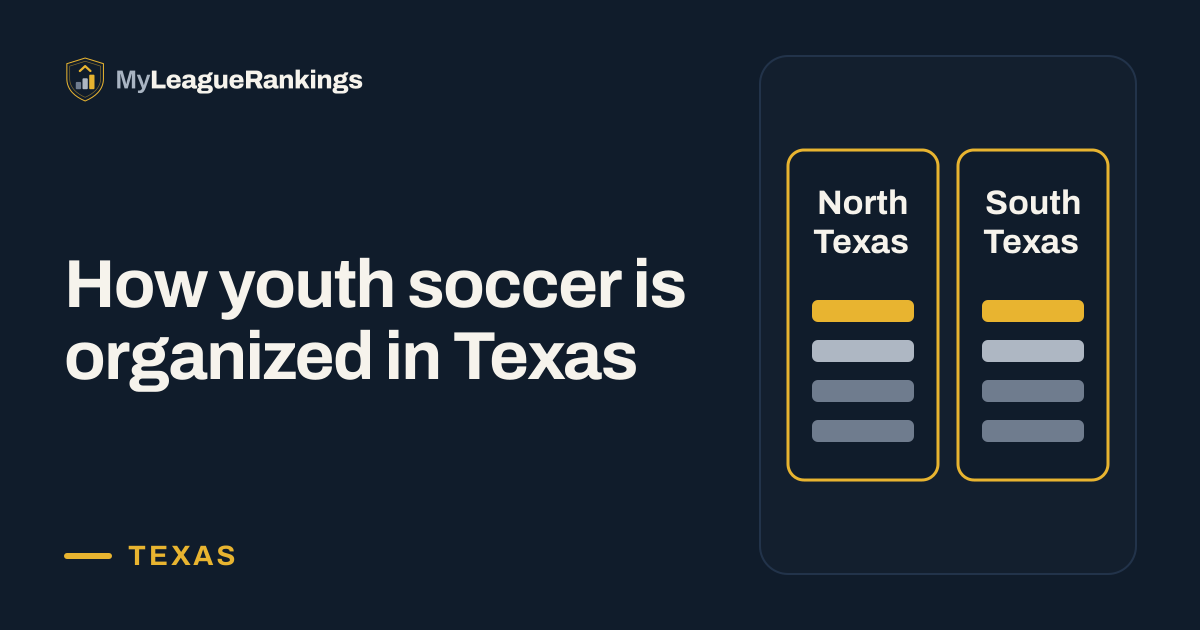
Texas is split between two state associations, and its leagues stack from national conferences down to local play. Here is how North Texas and South Texas fit together.
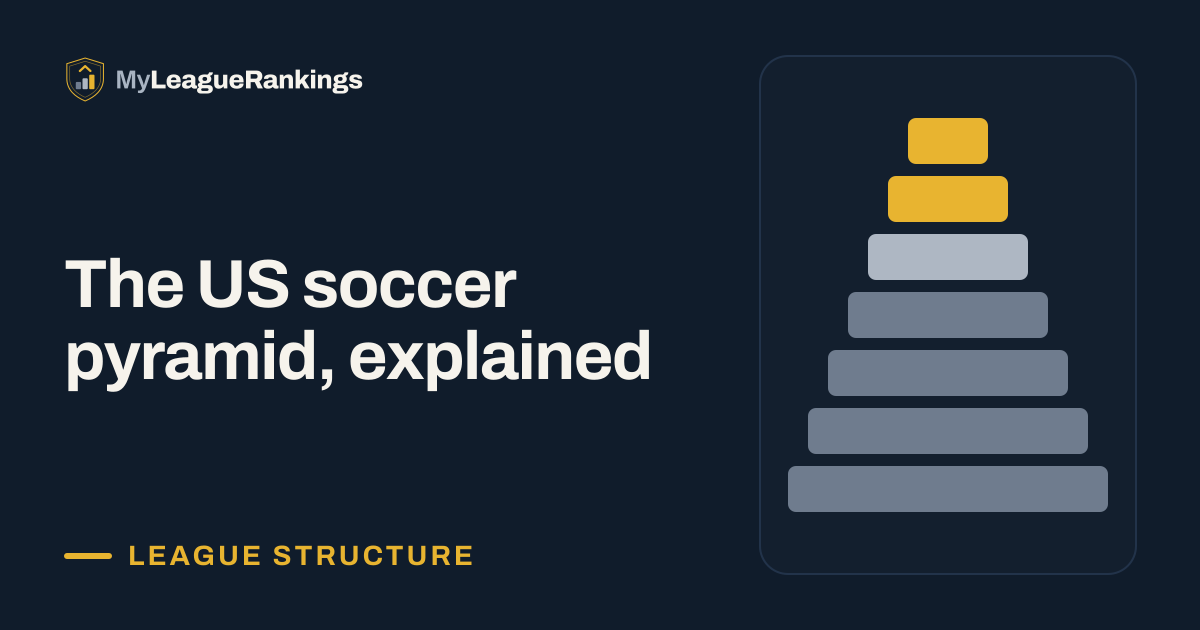
US soccer has no single ladder. This guide walks through the seven levels, from MLS and the NWSL down to recreational leagues, and explains how teams and players move between them.
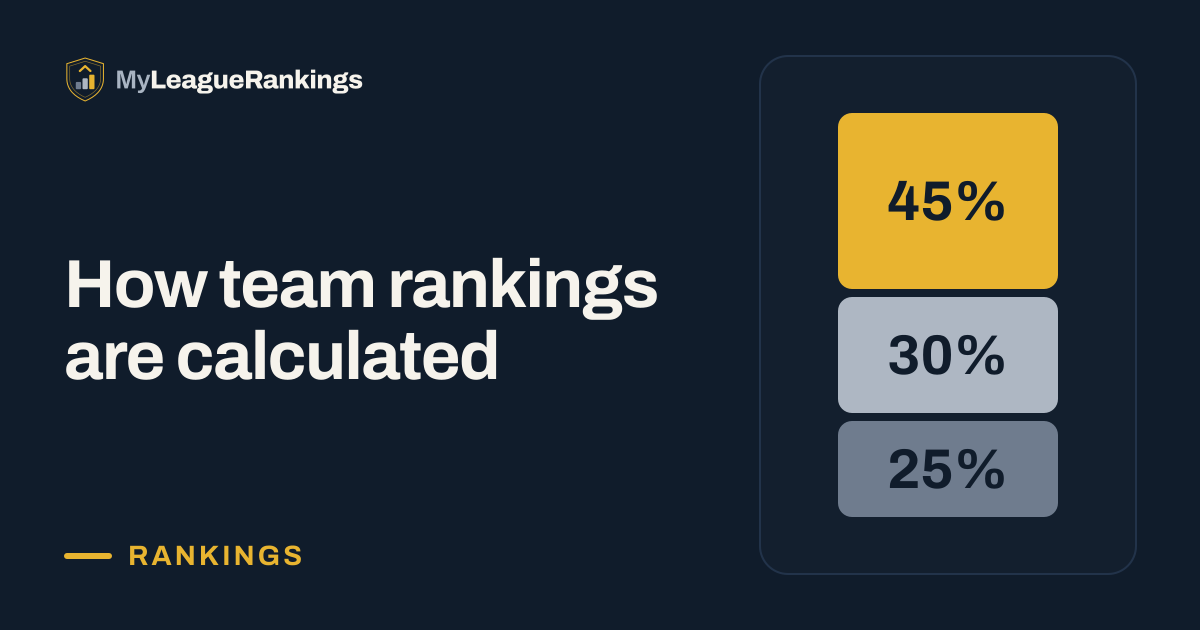
Our power ranking uses one input: final scores. Here is what counts, how the three ratings are blended, how strength of schedule works, and what the ranking does not do.